Dalian Northeast China, 2012
My trip to Dalian in 2012.
PLACE DIARY
7 min read
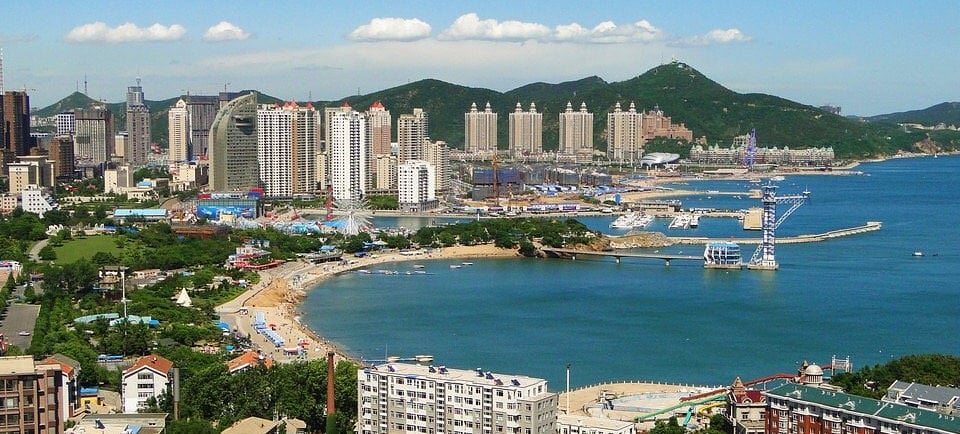
Dalian is a beautiful coastal city located in the northwest part of China. Here is my account of my first and only trip there in 2012.
Sea slugs, or is it sea cucumber? Either way, they look like the most disgusting thing you could possibly eat from the sea. I was staring at ads for them all over the place in Dalian airport. They are a delicacy in China, and Dalian is evidently a good place to get them. I had actually eaten them several times at this point. As is often the case, the taste is never as bad as you think (in fact, with these things, there is hardly any taste).
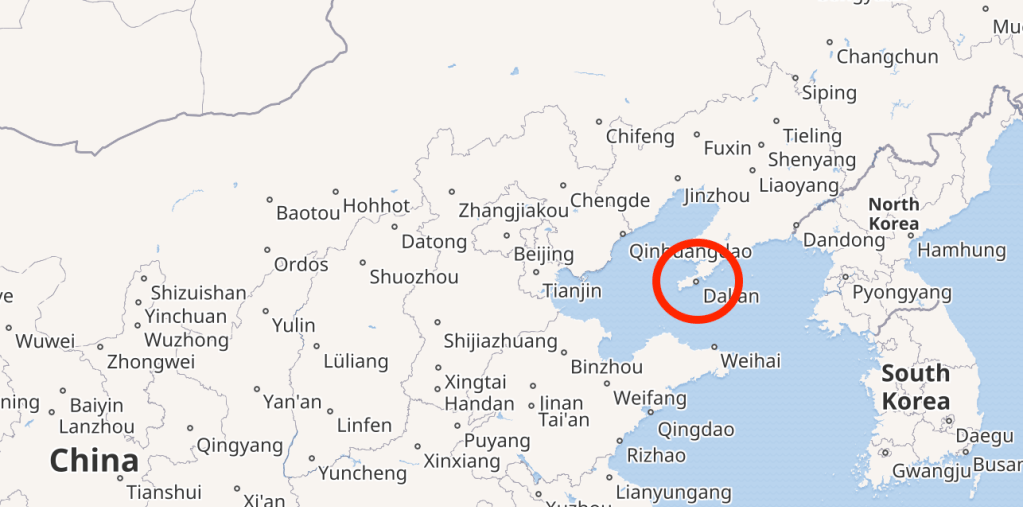
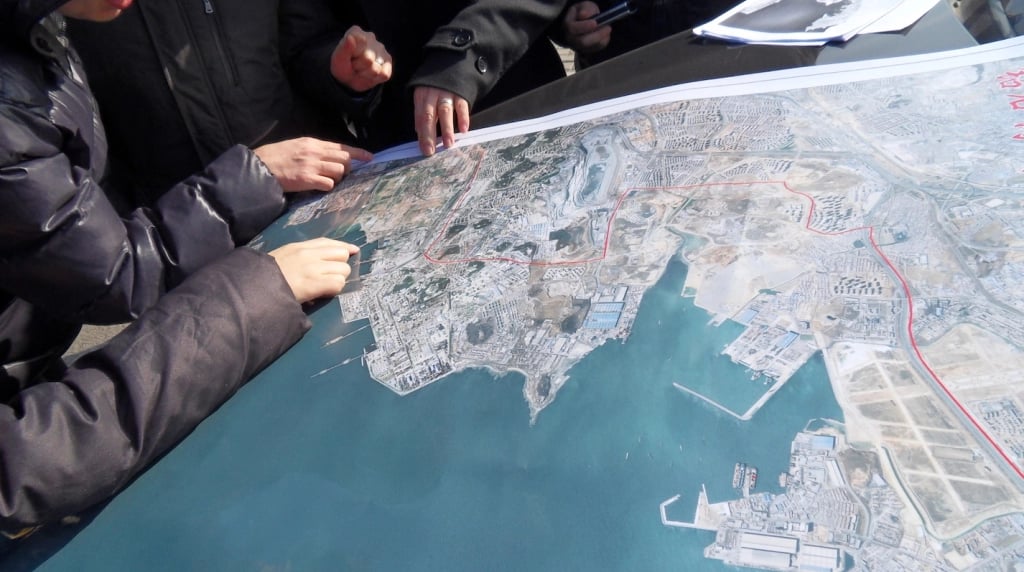
I was visiting Dalian for the first and only time as part of an urban development consulting project. My team were hired to prepare a concept proposal for a major re-development of Dalian's entire industrial coastline. Over 30 years it is to be transformed into a series of residential, commercial and mixed use districts and public amenities. The new 'Diamond Bay' waterfront area will become the motor for a local economy that wants to transition away from heavy industries to services and tourism.
A potted history of Dalian City
Dalian has an interesting history with a colonial past. It’s development as a city foreshadowed the end of the last ever royal dynasty, and the transition to the China Republic period of the early 20thcentury. As a small fishing village, Dalian became occupied by Russian forces in 1898. It had strategic potential with a large, ice-free harbor right on the southern tip of the Liaodong peninsula. Just like the British and French in Shanghai, the Russians had grand ambitions for Dalian with the desire to build a modern commercial port city, that would rival any great European city.
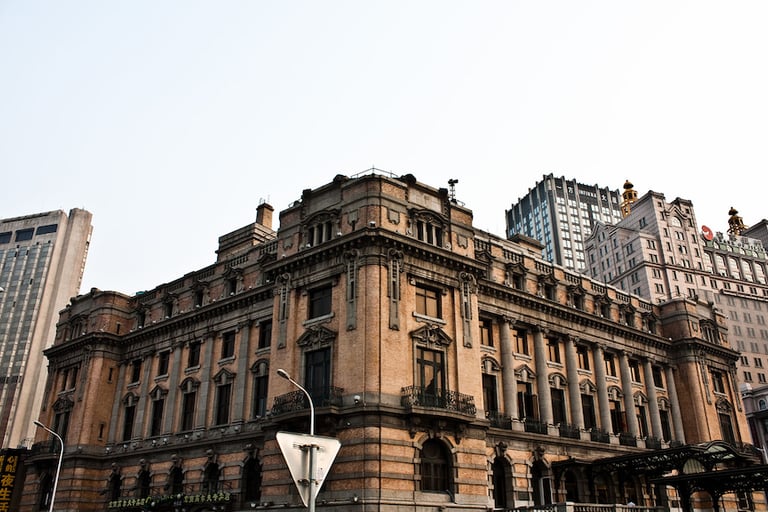
Dalian Hotel, formerly Yamato Hotel, built 1914 (image taken 2014. Source: wikimedia commons)
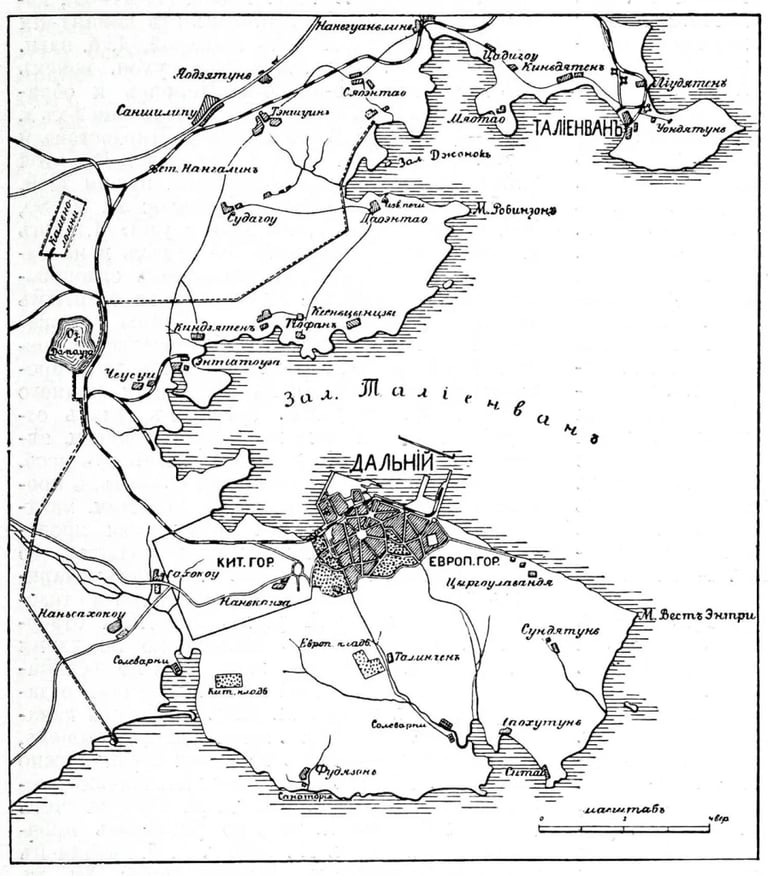
Russian Dalian (source: wikipedia)
However, Russia's plans for the city were cut short when the Japanese navy attacked in February 1904, and successfully crippled and blockaded the Russian fleet. Taking over power from the Russians, they proceeded to expanded Dalian habour into a major port facility until the Japanese occupation ended in 1945. The Soviet Union then returned to Dalian and contributed to its urban development for about 10 years. Thereafter, attitudes towards urban development in China were shaped by the ascendancy of the CCP. Mao's death in 1976 brought about the most significant shift in urban development policy with China's opening up to the global capitalist system. Dalian was granted a special Economic Development Zone in 1984. At the time it was China's largest foreign trade port. By the early 2000's, Dalian's GDP was growing by double digit figures annually.
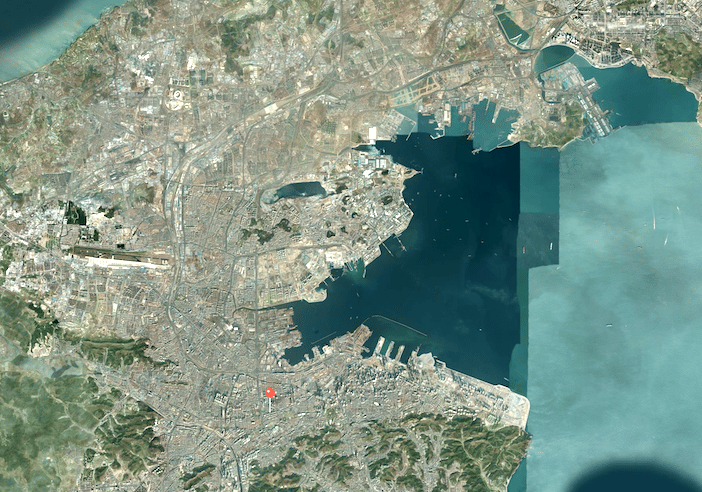
Satellite view if Dalian circa 2015 (Source: Apple Maps)
Site visit discussion
Diamond Bay Development Plan site visit
I took the below snaps during a two day visit with a team of planners and urban designers, as part of the ‘Diamond Bay’ flagship development project. With the development area a massive 40km2, the plan was to be very strategic in nature. The development area is mostly brownfield land with lots of heavy industry still active like chemicals, oil refineries, and ship building etc. We were given just 10 weeks to complete a concept masterplan proposal, which would form part of a competition involving several international and local consultant teams.
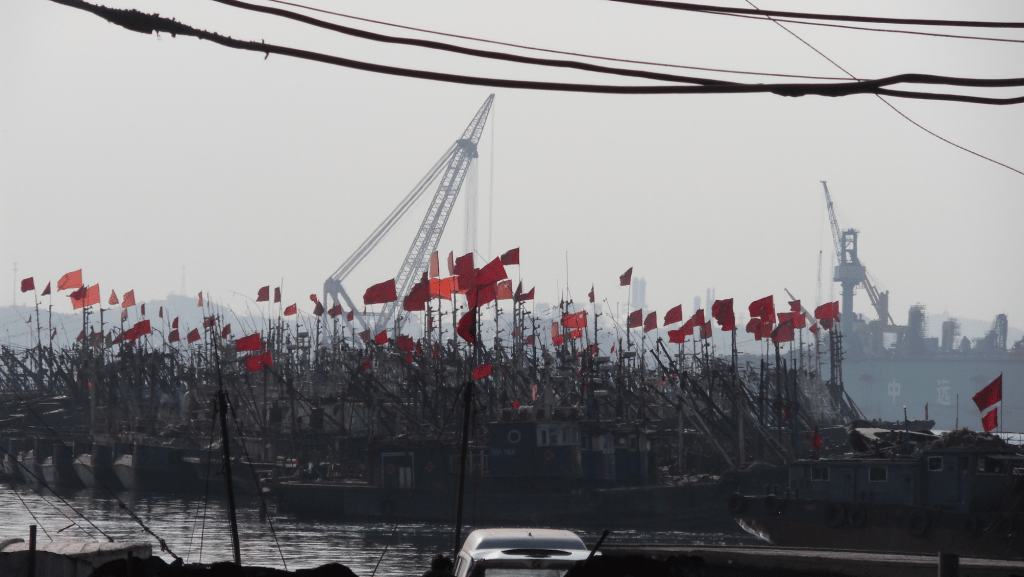
The Chinese flag is prominently displayed on small fishing boats along the harbour with shipbuilding cranes in the background
During the trip we got to visit some scenic areas along the coast. In fact Dalian is also popular tourist destination within China. It’s blessed with rolling topography of hills that provide shelter and an some instances an interesting backdrop to the cityscape. One sunny morning we took the scenic coastal road to the south of the old town which winds around a hilly area; it was the highlight of the three day trip for me. It reminded me of the Vico Road in Dalkey, Dublin back home. Similar scale, similar stunning view of the bay. People were out walking and cycling. It was bitterly cold because of the wind but the strong sunshine kept sheltered areas quite pleasant. I saw two old ladies doing the most incredible stretching exercises, raising their legs almost to 90 degrees as if they were adolescent gymnasts.
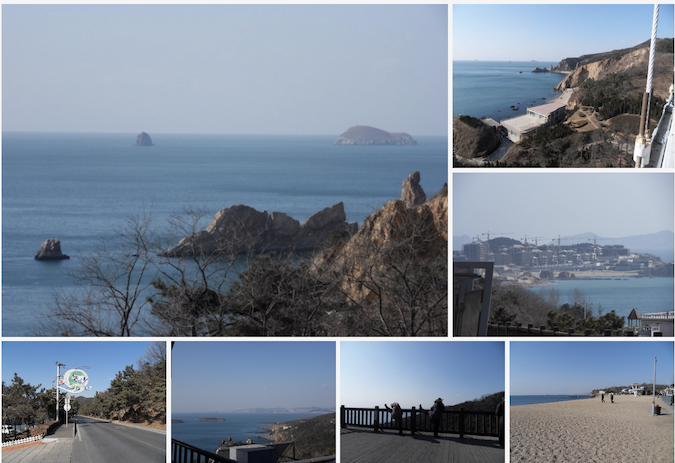
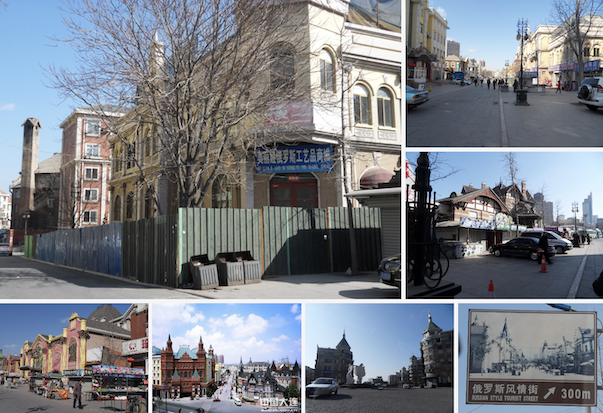
Dalian still retains elements of its colonial past in its eclectic urban form with a slightly more European sensibility owing to the Russian influence. A well known tourist attraction (as far as I could tell) that we visited was Russia Street, where one can buy Russian souvenirs and learn about the history of Russian Dalian. On the day we visited it was a lovely sunny day but there were no tourists. A lot of the shops appeared to be closed or undergoing renovation. It looked like it had seen better days. And it certainly looked very different in the the promotional photo from the government website (see below, bottom left) compared to the reality on the ground. If I had to sum it up in one word it would be tacky.
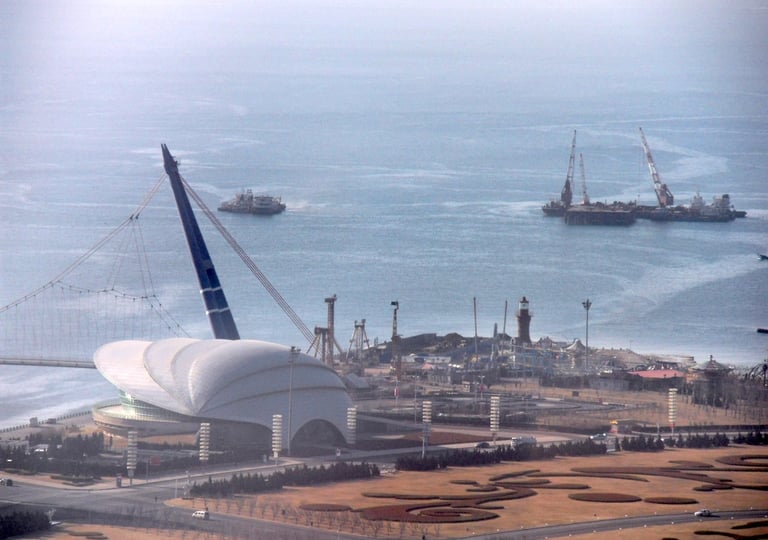
Dalian has a long-standing ship building tradition. The shipbuilding industry still accounts for one-third of the total industrial output. It's also an important international shipping center for northeast Asia. Dalian is also a base for petroleum refining, which is a prominent feature along stretches of its coastline. Moving such heavy and polluting industries and transitioning to a post-industrial coastline is no mean feat that can take decades, as many European and US cities have experienced. Based on the current development momentum in China, no doubt Dalian will achieve this in some bewilderingly compressed timeframe.
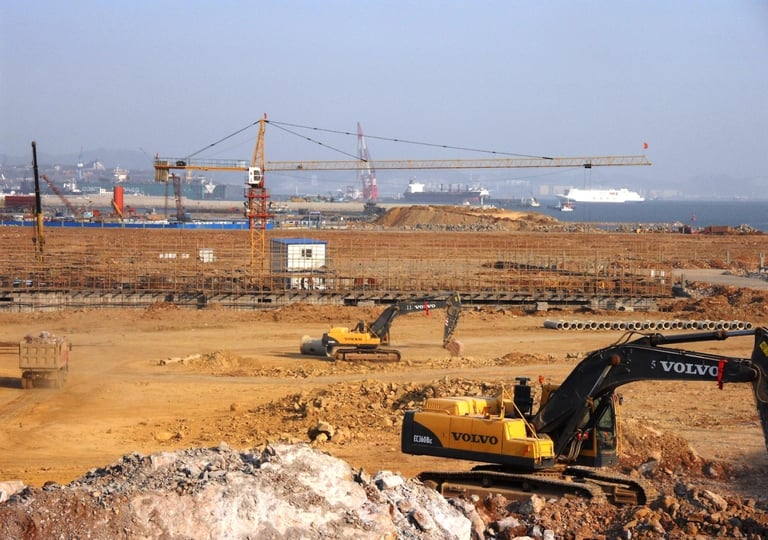
Major construction works were already underway across stretches of the coastline. I'm sure it is dramatically transformed now.
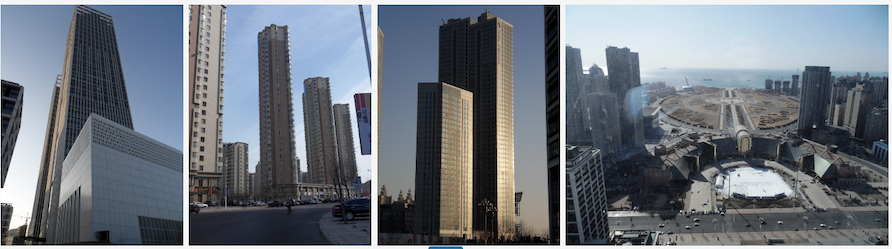
While I was in Dalian, I couldn't help but reflect on the obsession with extremely large scale urban form - overly tall buildings and over-sized plazas - which is common to most contemporary Chinese cities. There are many psychological, socio-economic and socio-political reasons for this type of Chinese urban development form; too many for me to articulate here. But from a user perspective, I felt let down passing through many parts of the city. Especially along the coast there are many plazas and promenades with no consideration of micro-climate; there was no shelter from the sharp biting cold of the Dalian winter. I remember thinking nobody would dare dwell in such windswept spaces during winter at least. Many high rise residential towers I saw looked way too tall and to me seemed more like monuments to greed that degraded the quality of the public realm. As a peninsula with many hills, land is certainly a precious resource in Dalian; high quality high density compact development is not always easy to deliver. Let's hope that in time, as the municipal planning bureau gets more sophisticated, the quality of architecture and urban design will be elevated accordingly.
What did I learned in my three days in Dalian? Chinese cities with a colonial past can have very interesting architectural heritage. And that heritage can have continuity to the present in the way it influences contemporary urban design. In Dalian’s case it was mainly the Russians who left their mark, then the Japanese. The somewhat eclectic architecture and generous green spaces is a legacy of its colonial past. Together with the hilly topography and peninsula landscape, Dalian definitely has the potential to become a highly sought after place to live in decades to come. I have no doubt in 20 years Dalian Diamond Bay will be a very different place with the heavy industry completely vanished; with new living and commercial districts and public amenities already established along its waterfront.
It's still a golden moment for urban development in China. At the same time all Chinese cities still carry the threat of what one could call 'neoliberalism with Chinese characteristics', with the end result looking like a twisted American car-based urbanism of over-sized highways, gated communities, and transient shopping malls and office blocks that lack a sense of identity and often need to get renovated within five years or so. In Dalian's case, hopefully its strong urban heritage can help foster a greater appreciation within the local government for human scale places that are designed to promote healthy local communities where people can feel a sense of attachment and belonging.