Emerging domestic tourism centre in Sichuan, China
This is a story of how an international team of urban designers, planners and landscape architects collaborated with locals to develop a regional tourism plan in Sichuan covering approximately 70 square kilometers. The plan has helped the local government and stakeholders see the potential of developing the area from a holistic place-making perspective, and avoiding a more 'tabula-rasa' approach with contrived notions of what might attract people to visit. It will hopefully go some way to guiding future development proposals towards a sustainable development path.
URBAN DESIGN PROJECTURBANISM
3/30/20257 min read
Summary
Like many things in China, tourism is changing rapidly. A notable shift in this landscape is being driven by younger generations who are redefining traditional travel experiences in favor of more active recreational pursuits. Domestic travel has progressed from moving from one destination to the next on coaches to pursuing quality and immersive experiences. The promotion of ecotourism in places like Sichuan and Yunnan provinces is encouraging the Chinese youth to stay in their own provinces rather than to migrate to export-processing provinces. This is something that the government actively supports.
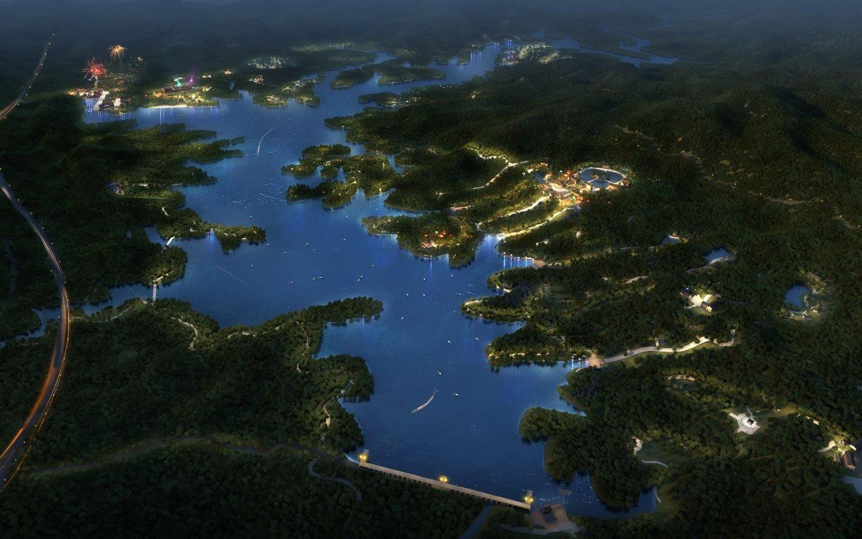
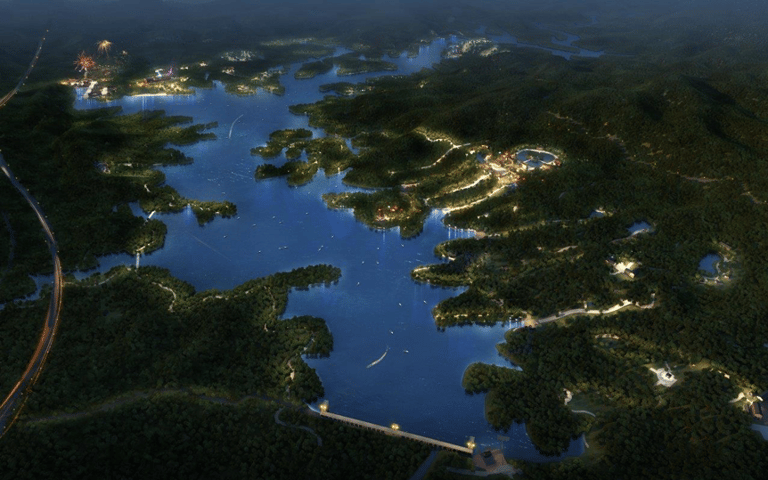
In 2015 I had the opportunity to work with a team of urban designers, planners and landscape architects on a regional tourism plan in Sichuan covering approximately 70 square kilometer. The plan incorporated a concept masterplan for a 7 km2 key design area, centred around a scenic lake, and the engagement lasted approx. 6 weeks. We were awarded first place amongst four teams participating in an international competition organized by the local government. The plan has helped the local government and stakeholders see the potential of developing the area from a holistic place-making perspective. It will hopefully go some way to guiding future development proposals towards a sustainable development path.
Project overview
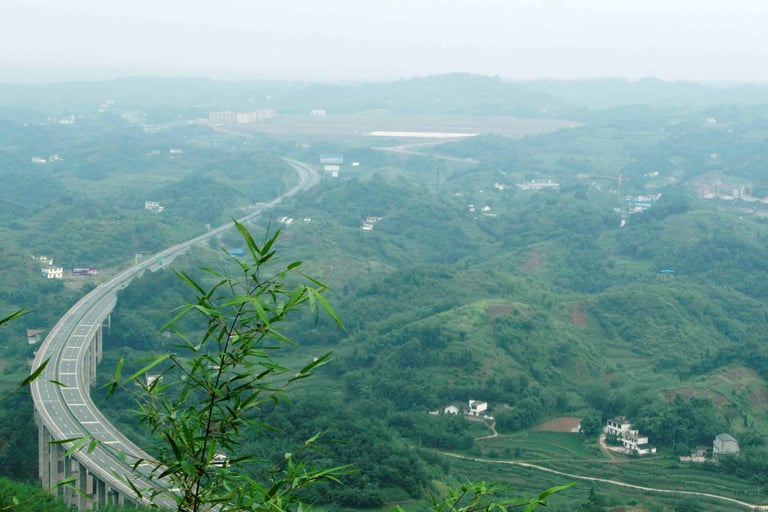
The development area is located south of the Yangtze River in a remote part of Sichuan. It took us about half a day to get there by plane from Shanghai and then a long car drive. With abundant natural resources and reasonably good access off a highway, the area is strategically positioned for tourism growth. The 70sqm study area is largely undeveloped with two small villages to the north and south of a man-made lake, which is nestled into surrounding undulating mountains and valleys. The objective of the regional government is to exploit the scenic beauty of the local landscape to stimulate the local economy through tourism development and activities. The engine of development growth will be the man-made lake at the heart of the area. The lake was formed after the construction of a dam in the area which safeguards the local water supply.
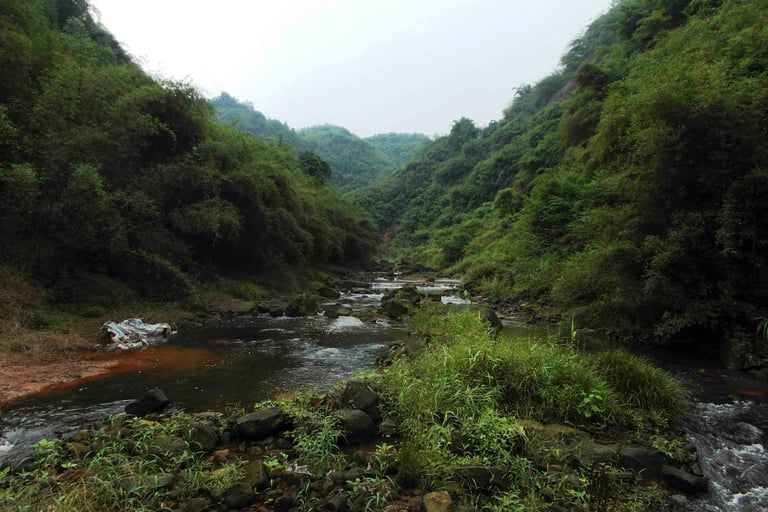
After multiple extensive site visits we agreed the believed the most precious resource in the area was not the dam itself but the beautiful surrounding natural landscape.
We worked with a local tourism consultant to understand the existing strengths, weaknesses and opportunities in the area and region. We identified that the main potential was for young and middle aged tourists to visit the site for sightseeing purposes and leisure. They mostly travel in groups of family or friends and are increasingly seeking more adventurous and active experiences. They pay high regard for accommodation quality and scenic beauty in deciding where to take their vacation. A competitive analysis was also undertaken by the sub-consultants whereby other sites in the surrounding region where compared so as to seek out a brand identity and activity list that would set apart our study area from other tourist spots in the region. After studying a number of similar cases in Europe and China, we proposed that the dam area had the potential to become a regional level eco-tourism resort.
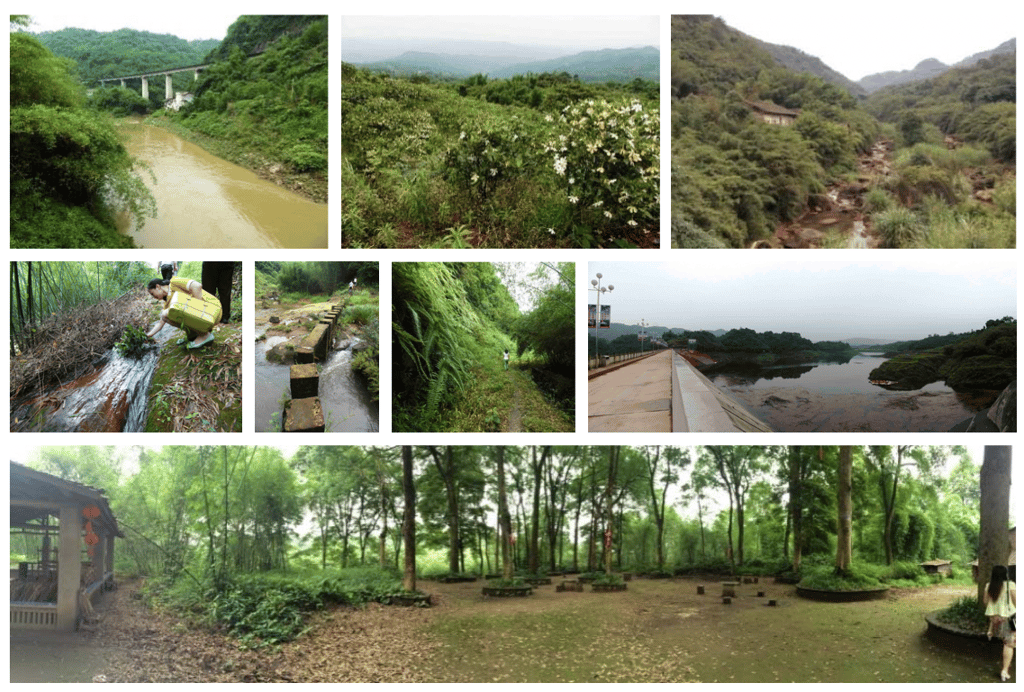
We undertook our own comprehensive spatial analysis of the existing terrain, including the settlement pattern, accessibility, topography, natural assets, etc. A slope analysis was undertaken to demonstrate accessibility and areas with steep slopes that would be less suited for tourism-related activities. The site is afforded with great natural amenities such as bamboo forests, a waterfall, locations with attractive views and vistas, etc. There were a few ad hoc tourist development proposals in the area but these were seen as of low quality.
Armed with sufficient layers of information and analysis work, we proceeded to construct a regional conceptual framework plan, which divided the area up into three tourist hubs and three distinctive forest areas. The two existing villages are positioned as gateways providing access into the forest areas and the central lake district.
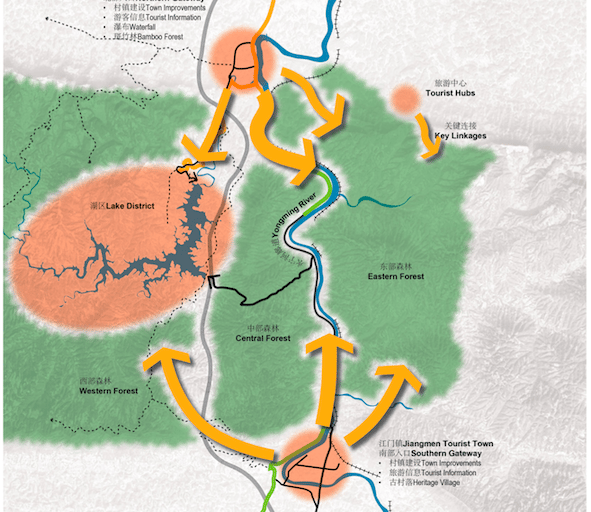
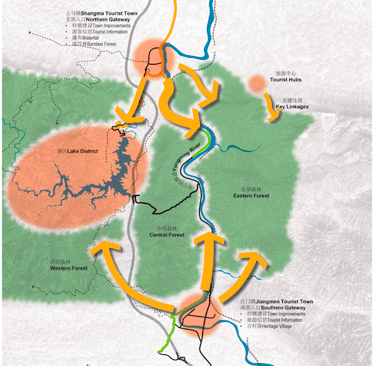
Regional concept plan proposal
We developed eight principal tourist experience routes as part of a movement strategy which link the existing and new tourist nodes. The routes were given specific identities based on the types of activities proposed, such as Heritage and Education, Active Health Panorama, Action Adventure, Food Lover’s Paradise, Health Retreat, and Extreme sports.
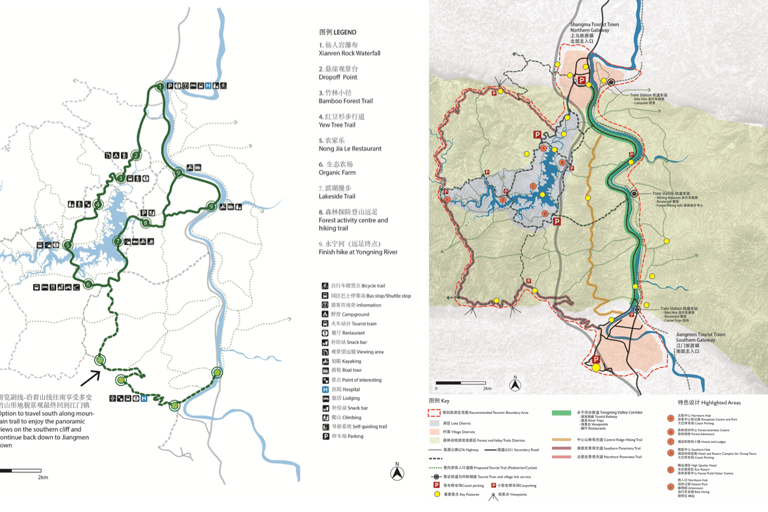
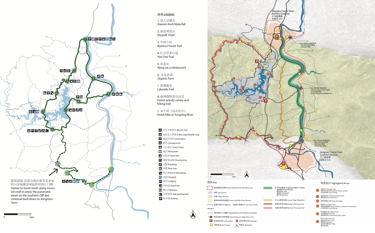
Lake District core area design concept
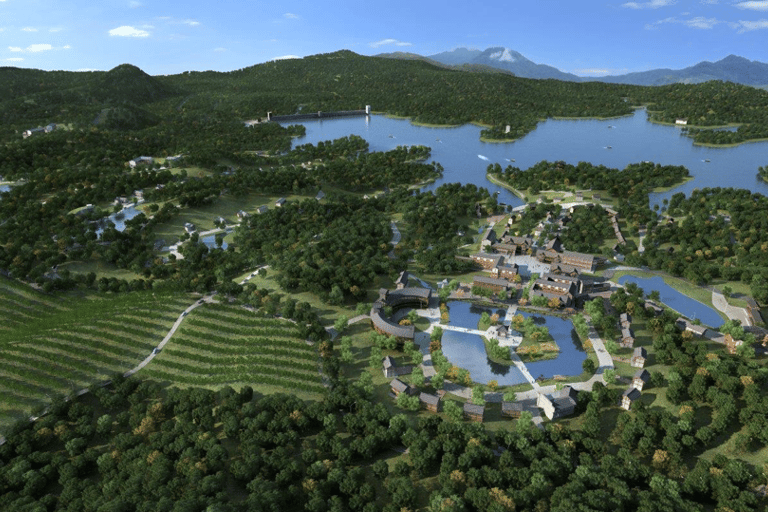
The Lake District is envisaged as the primary tourist centre of the region. We started out with some design concepts for the lake area which grew into a spatial structure plan. The lake is perceived as a dragon with head, body and tail.
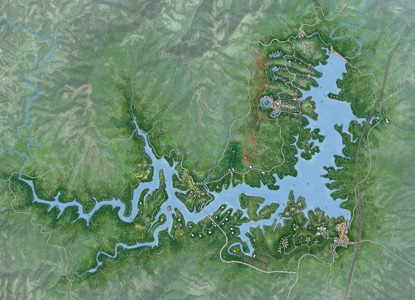
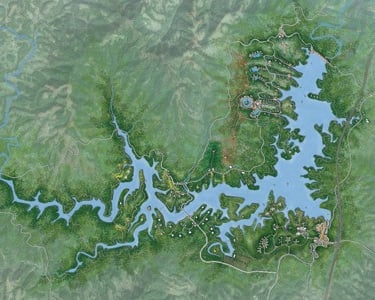
Lake area concept masterplan proposal
We took inspiration from the Chinese concept of the five elements that make up everything on earth - gold, wood, water, fire, earth. We conceived of five character areas drawing on the unique characteristics of each element matched to the potential of the local area. We felt the 5 elements theme tied to the specific and unique landscape of the area also had good branding potential in a highly competitive market, appealing to the local and national sentiment for symbolism as part of a landscape identity.
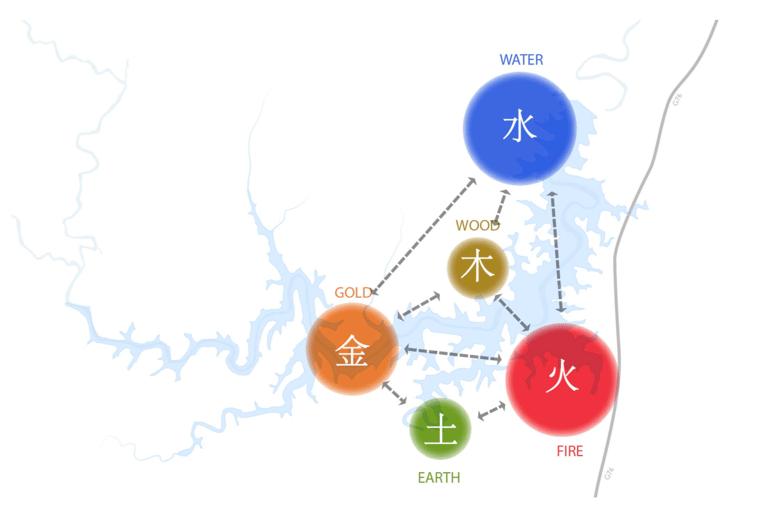
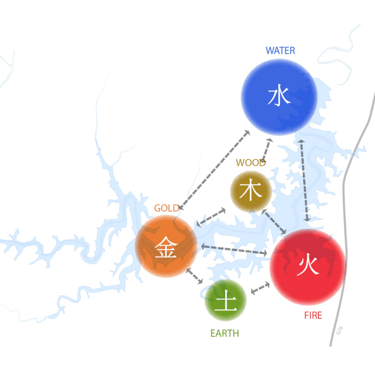
Two main nodes are formed at a northern and a southern gateway. The northern node has a closer relationship to water with the presence of village ponds and the vibrant lakeside activities. Representing the element of ‘fire’, the Southern Gateway will be the most vibrant part of the lakeside with larger developments such as large hotel accommodation including a ballroom for weddings and large parties, a conference room for events, and supporting activities including holiday village and lakeside harbour. A third node is inspired by the element of ‘gold’ where two high end resorts are proposed on either side of the lake: a low carbon eco-resort to the north, and a gated high-end villa estate to the south, connected by two bridge crossings. The fourth and fifth nodes are made up of small village clusters representing wood to the north and earth to the south.
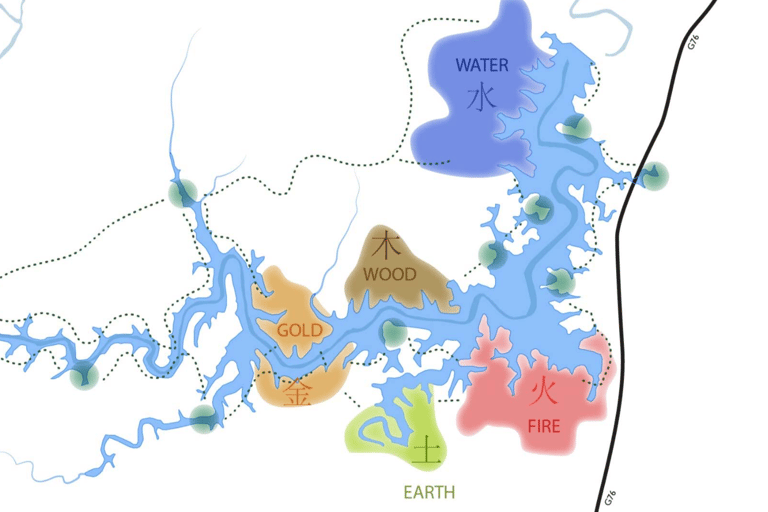
The five themed nodes represent distinctive character areas which are well connected by lakeside trails. They are accompanied by a network of isolated activity nodes, mainly non-commercial features such as pagodas, bird watching areas and farmer’s guesthouses (nong jia le yuan).
Personal reflections
When we first visited the site, we observed a very unusual-looking construction project where they were pouring a lot of concrete down the side of a mountain in what looked to be an attempt to create a natural looking waterfall, as some sort of contrived artificial attraction. We were shown some current development proposals that looked very much out of scale and not in keeping with the delicate landscape character. To us this was a sign that the area was already under threat from poor quality ad hoc development proposals that would have compromised the ability of the area to reach its tourism potential. Dealing with tensions like this from competing stakeholders is always a key challenge for planning and urban design consultants. We felt our design proposals went some way to showing the government the benefits of a holistic place-making approach that respected the existing landscape character; helping them to recognize what makes the landscape so special, and helping them see the latent potential in some of the existing features like the old elevated railway line and bamboo forest.
One of the key strengths of our proposal is the way we stitched so many interesting ideas into a cohesive plan articulated at two distinct scales – the wider tourism region and the central lake district, which is to become the primary tourism hub. We relied on the principle of maintaining harmony between man-made and natural landscape features. We attempted to draw out the latent potential of the area with a distinct and unique identity drawing on both existing and proposed features. Our proposed themed routes helped linked key attractions, offering different tourism activities and experiences for different types of people on different types of holidays - day trippers, weekenders, people on summer/winter retreats etc.
Tourism in China is seeing a dynamic shift as younger generations emerge as key players. Their preference for active recreation encourages a transformation of the tourism sector, steering it toward sustainable practices and adventure-based experiences. I'm proud of what we achieved in delivering a comprehensive tourism framework plan to the local government in such a short space of time. We came up with a compelling vision for the new tourism area, and were awarded first place in a competitive bid for the follow-on detailed planning stage. We overcame multiple constraints with the site located very far from our studio in Shanghai, and bringing together a global team of experts from as far away as Scotland. I hope to get the chance to re-visit this area in years to come and see which, if any, of the ideas have been taken forward and realized as part of the formally approved plan.